
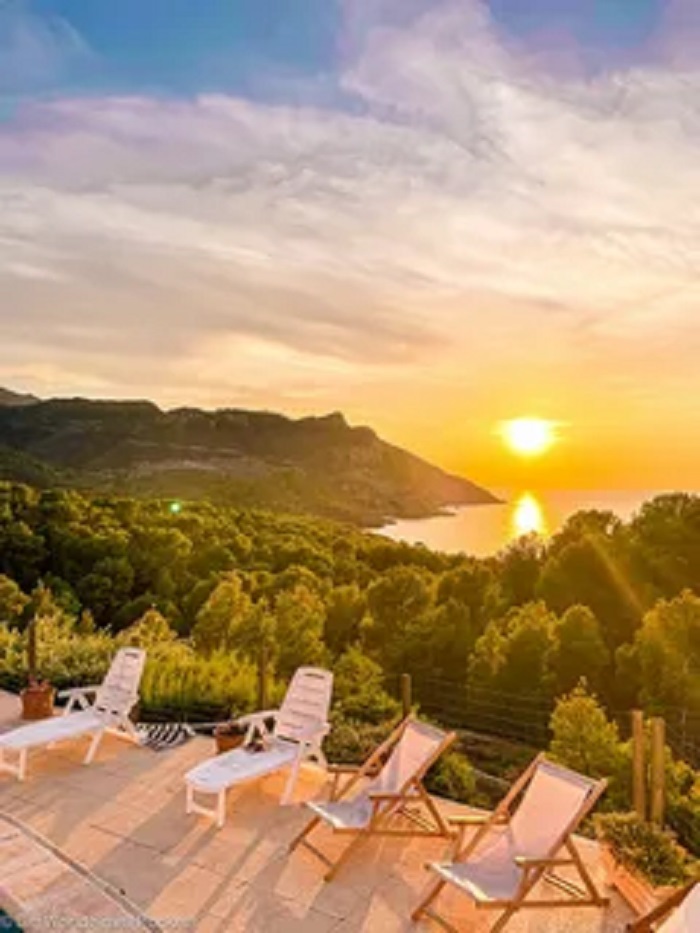
Palma, Sóller and Alcúdia may belong to the same island, but staying in each leads to a very different holiday. In Palma, days begin in cafés and often end in busy restaurants. Sóller places mountain roads and walking trails close at hand. Around Alcúdia, life revolves around a long sandy shoreline and the practical comforts of a family resort.
The distances between these places appear modest on a map. In practice, summer traffic, winding roads and limited parking can add time to an apparently short journey. Finding the best area to stay in Mallorca therefore depends less on hotel ratings and more on what you plan to do after breakfast.
A well-placed base reduces unnecessary driving and makes spontaneous stops easier. The seven areas below cover city breaks, mountain escapes, family beaches, nightlife and quieter rural stays.
What Matters When Choosing a Base?
Begin with the shape of the holiday. Someone planning daily hikes in the Serra de Tramuntana needs a different location from a family hoping to walk from the hotel to a shallow beach.
Before reserving accommodation, consider:
- which places you expect to visit more than once;
- whether you want restaurants within walking distance;
- how often you are willing to drive;
- whether the property includes private parking;
- how comfortable you feel on narrow mountain roads;
- whether nearby nightlife would be welcome or disruptive;
- if you prefer a long sandy beach or a small rocky cove.
For three or four nights, changing hotels rarely saves enough time to justify the effort. Over a full week, two bases can work well, particularly when combining the mountains with the east or north coast.
Mallorca’s Main Areas at a Glance
| Area | What you will find | Possible drawback |
|---|---|---|
| Palma | Architecture, markets, restaurants and nightlife | Limited and often expensive parking |
| Southwest coast | Resorts, beaches and plenty of holiday facilities | Heavy summer crowds in the busiest towns |
| Sóller | Mountain scenery, historic streets and walking routes | Longer journeys to eastern Mallorca |
| Pollença | Northern beaches, traditional streets and outdoor activities | Popular accommodation fills early |
| Alcúdia | Long beaches, family facilities and a medieval old town | The resort strip can feel busy in peak season |
| Southeast coast | Small coves, harbour towns and relaxed evenings | A car helps when moving between beaches |
| Central Mallorca | Rural hotels, vineyards and quieter surroundings | No beach within walking distance |
1. Palma: City Streets, Markets and Late Dinners
Palma has enough going on to fill several days without a car. La Seu Cathedral rises above the waterfront, and the streets behind it retain much of their medieval layout. Walking through this part of the city reveals old courtyards, churches, galleries and small squares that are easily missed from a vehicle.
The neighbourhood around La Llotja becomes lively in the evening, while Santa Catalina draws people to its market, bars and restaurants. Palma also has the island’s broadest year-round cultural programme, which makes it an appealing base outside the main beach season.
Central Palma suits travellers who care more about food, architecture and nightlife than having a sandy beach immediately outside the hotel. Urban beaches are available nearby, but the historic centre feels like a Mediterranean city rather than a coastal resort.
Parking is the main inconvenience. The streets are narrow, some areas have access restrictions, and public garages can add a noticeable amount to the daily budget. If the first part of the trip is devoted to Palma, collecting a rental car only when you are ready to leave the city is often simpler.
2. The Southwest Coast: Resorts, Beaches and Busy Evenings
The coastline southwest of Palma contains a dense collection of hotels, apartments, beaches and restaurants. Transfers from the airport are relatively straightforward, and most everyday holiday needs can be handled without travelling far from the accommodation.
Palmanova has a broad beach and a calmer evening atmosphere than neighbouring Magaluf. Magaluf remains the better-known nightlife centre, although its beach also attracts families and daytime visitors. Santa Ponça offers another large beach with plenty of shops, restaurants and practical facilities.
Farther west, Port d’Andratx feels more polished and harbour-focused. Restaurants line the waterfront, while the surrounding hills contain villas and smaller hotels. It also provides a useful starting point for trips towards Sant Elm and the western side of the Tramuntana.
These destinations should not be treated as interchangeable. A hotel in central Magaluf creates a very different stay from a property overlooking Port d’Andratx. Check the immediate neighbourhood rather than relying only on the regional name shown by the booking platform.
3. Sóller and Port de Sóller: Between the Mountains and Sea
Sóller sits in a valley of citrus groves beneath the Serra de Tramuntana. Its central square is crossed by the historic tram, with cafés arranged around the church and narrow streets leading into older residential quarters.
Port de Sóller lies a few kilometres away around a sheltered bay. The promenade, beach and waterfront restaurants give it more of a holiday atmosphere, while the town of Sóller feels closer to everyday village life.
Either location places Fornalutx, Deià and Valldemossa within reach. Hiking routes begin nearby, and the tram connects Sóller with the port, removing the need to move the car whenever you travel between them.
The area is less practical when most of the itinerary lies on the east coast. Crossing Mallorca repeatedly takes time, particularly when the route involves mountain roads.
Ask about parking before confirming accommodation. A hotel described as central may be convenient for walking but some distance from the nearest place to leave a car overnight.
4. Pollença and Port de Pollença: A Quieter Northern Base
Pollença is an inland town of stone buildings, shaded streets and small squares. The Calvari Steps climb above the centre, and evenings tend to revolve around restaurants rather than clubs or large entertainment venues.
Port de Pollença has a long promenade and broad beaches, along with a larger selection of holiday apartments and family-oriented hotels. The port is easier for travellers who expect to swim every day, while the old town has more historic character.
Both locations put northern Mallorca within comfortable reach. Alcúdia, the northern Tramuntana and the Formentor peninsula can be included in day trips without crossing the entire island.
Road access towards Cap de Formentor is restricted during parts of the year. Dates and operating hours can change, so check the current rules instead of relying on information from a previous holiday season.
This region also attracts large numbers of cyclists. Drivers should expect bicycles on rural and mountain roads, particularly during spring and autumn.
5. Alcúdia and Playa de Muro: Room for a Family Beach Holiday
Medieval walls surround Alcúdia’s compact old town, where pedestrian streets lead between restaurants, shops and historic buildings. A few kilometres away, Port d’Alcúdia has a completely different rhythm, shaped around its marina and long beach.
The sand continues towards Playa de Muro, where shallow water and a broad shoreline make the area popular with families. Hotels, restaurants and holiday apartments are plentiful, and many properties provide facilities designed for stays with younger children.
The old town becomes especially atmospheric after sunset. Port d’Alcúdia and Playa de Muro are more convenient when carrying beach bags, pushchairs and everything else that tends to accompany a family day by the sea.
Northern towns, inland markets and the northeast coast are all accessible from this part of Mallorca. Local roads are generally less demanding than the routes around Sóller and Sa Calobra, which may reassure visitors driving on the island for the first time.
6. Cala d’Or and Santanyí: Small Coves in the Southeast
The southeast coast is broken into narrow inlets rather than long, continuous beaches. Some coves sit between pine-covered slopes, while others are surrounded by compact resorts and residential streets.
Cala d’Or has several beaches, a marina and a large choice of restaurants and accommodation. Its layout works well for travellers who want resort facilities without the scale of Mallorca’s largest coastal towns.
Santanyí lies a short drive inland. Stone buildings, galleries, restaurants and its market give the town a more local rhythm. Staying here keeps the coast nearby without making the holiday entirely dependent on the beach.
Cala Figuera, Cala Santanyí, Cala Llombards, Portopetro and Mondragó Natural Park are spread across the surrounding region. A car makes moving between them easier, but trying to visit too many coves in one day usually means spending more time parking than swimming.
Spaces near the best-known beaches fill early during summer. A morning swim followed by lunch inland is often more enjoyable than arriving at the coast during the busiest part of the afternoon.
7. Central Mallorca: Farmhouses, Vineyards and Quiet Roads
The centre of the island has fewer conventional hotels and no beaches within walking distance. What it does offer is space: open farmland, vineyards, traditional towns and rural properties set away from busy resort streets.
Sineu is known for its old centre and market. Binissalem and Santa Maria del Camí sit in one of Mallorca’s established wine-producing areas. Restored farmhouses around these towns often have gardens, pools and private parking.
A central base works surprisingly well for travellers planning day trips in several directions. Palma, the north and much of the east coast can be reached without beginning every journey from one far end of the island.
Public transport is limited around rural properties, so a car is usually necessary. Check the arrival instructions before setting out. The final approach to a farmhouse may involve a narrow lane or an unpaved entrance that is easy to miss after dark.
Where to Stay in Mallorca Without a Car
Central Palma is the easiest answer. Restaurants, shops, markets and major historic attractions are within walking distance, while buses connect the city with the airport and other parts of the island.
Port de Sóller can also work without a car because the tram connects it with Sóller and boats provide another way to explore the northwest coast. Larger resorts such as Palmanova, Port d’Alcúdia and Playa de Muro have useful services nearby, although reaching remote villages and coves will require more planning.
When travelling without a vehicle, check the walking route between the accommodation and the nearest bus stop. A short distance on a map may still involve a steep hill or a road without a comfortable pavement.
One Hotel or Two?
A three- or four-night visit rarely needs more than one base. The time saved on the road is easily lost while packing, checking out and waiting for another room.
Over seven or more nights, changing region once can make sense. Palma followed by Sóller combines city life with the mountains. Palma and Alcúdia provide a mix of culture and family beach time. Sóller followed by Santanyí replaces long cross-island day trips with two contrasting stays.
Two bases are generally enough. Adding a third is worthwhile only when the trip is longer or the accommodation itself is part of the experience.
When to Collect a Rental Car
Hiring a car for every day of the holiday is not always necessary. Two nights in central Palma may involve little more than moving the vehicle between a garage and the hotel.
For a city-first itinerary, explore Palma on foot and collect the car when leaving for the next region. Airport collection is more convenient when the accommodation is outside the capital, particularly when travelling with children or several suitcases.
Before accepting a rental offer, check:
- the security deposit and accepted payment methods;
- the insurance excess and main exclusions;
- the fuel return policy;
- daily or total mileage limits;
- charges for an additional driver;
- airport, hotel or late-arrival fees;
- overnight parking at the accommodation;
- the procedure for reporting damage or a breakdown.
For travellers who do not want a large amount held on their card, RentGo Mallorca provides rental options without a large security deposit or mandatory credit card. Payment, fuel and insurance conditions depend on the selected vehicle, so review the details before completing the booking.
A zero-deposit offer does not automatically include zero insurance excess. The deposit is the amount held or collected at pickup; the excess is the amount for which the renter may remain responsible under the insurance agreement.
How a Seven-Night Stay Could Work
First two nights: Palma
Spend the opening days around the cathedral, old town, markets and waterfront. Collect the car after checking out rather than paying to keep it in a city garage.
Next two nights: Sóller
Travel through Valldemossa and Deià on the way north. Leave the following day for Sóller, Fornalutx, the port or a mountain walk.
Final three nights: Alcúdia or Pollença
Use the northern base for beaches, Alcúdia’s old town and the Pollença area. Formentor can be added after checking the current road restrictions.
This arrangement covers three distinct parts of Mallorca without requiring a hotel change every morning.
Details Worth Checking Before You Book
The exact location
Hotel names sometimes refer to the nearest famous town rather than the immediate neighbourhood. Look at the map and surrounding streets before relying on the destination name.
Parking arrangements
“Parking nearby” may refer to paid public spaces rather than a private hotel car park. Ask whether spaces can be reserved and whether the garage has a height restriction.
The nearest usable beach
A sea view does not guarantee easy access to a sandy beach. Some coastal properties overlook cliffs, rocks or a harbour. Check the walking route as well as the straight-line distance.
Evening noise
A room above a lively square can be enjoyable until the cafés close and morning deliveries begin. Recent guest reviews are often more useful for judging noise than the property description.
Realistic driving times
Mountain traffic, cyclists and parking searches are not always reflected in navigation estimates. Avoid building an itinerary that depends on every journey running exactly to schedule.
Frequently Asked Questions
Which part of Mallorca works well for a first visit?
Palma offers the broadest mix of food, history and nightlife. Alcúdia and Playa de Muro are easier for a family beach holiday, while Sóller suits travellers who place mountain scenery above resort facilities.
Where should couples stay?
Sóller, Pollença and Santanyí combine attractive streets with good restaurants and relatively quiet evenings. Palma has more nightlife and suits a shorter, city-focused trip.
Where are Mallorca’s long sandy beaches?
Some of the longest sandy stretches are around Alcúdia and Playa de Muro. The southeast is better known for smaller coves, while the northwest coast is rockier and more dramatic.
Can Mallorca be explored from a single hotel?
Yes, particularly during a short stay. Repeated journeys between opposite coasts become tiring over a full week, which is why two bases may be more comfortable for a wider itinerary.
Is a rental car essential?
Not for central Palma or a holiday spent mainly around one resort. It becomes useful for rural hotels, mountain villages, scattered coves and days containing several stops.
Which area is most convenient for families?
Port d’Alcúdia and Playa de Muro combine long beaches with restaurants, shops and family-oriented accommodation. Port de Pollença and Santa Ponça are also practical alternatives.
Let the Itinerary Decide
If most of your saved locations are in the mountains, look near Sóller or Pollença. If the holiday is built around swimming, begin with Alcúdia, Playa de Muro or the southeast coast. For restaurants, architecture and evenings out, Palma remains difficult to beat.
Plot the places you care about on a map before opening the hotel listings. The cluster that appears will usually tell you more than another hour spent comparing room photographs.