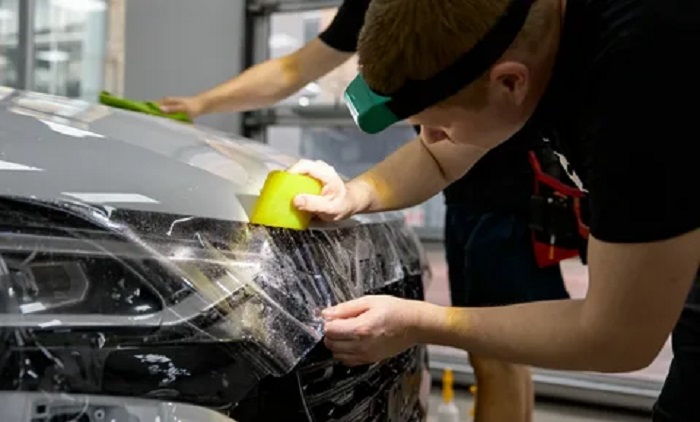
There is a tempting shortcut in Auckland vehicle appearance and protection: pick the option with the strongest headline number and assume the rest will follow. A commuter worried about motorway chips needs a different treatment from an owner who mainly wants easier washing. PPF, coating and wrap solve overlapping but different problems. The better purchase starts with the result that must remain stable.
The headline number is not the operating result
Maximum speed, capacity, brightness, address pool, course hours or platform access can be useful reference points. None of them describes the complete job. The real outcome depends on how the product meets the surrounding process and how consistently that match can be repeated.
This is also the point where a detailed brief saves more time than another round of general quotations. For this purchase, begin with paint condition before installation and coverage areas and edge finishing; both affect the result before less important extras enter the discussion.
A compact comparison that people will actually use
- Paint condition before installation: Ask for the normal range of paint condition before installation, then ask what happens just outside it. The second answer often reveals how gracefully the product handles everyday variation.
- Coverage areas and edge finishing: Write one pass-or-review rule for coverage areas and edge finishing. It need not be complicated, but it should be clear enough that a colleague can reach the same conclusion.
- Film thickness or coating chemistry: Film thickness or coating chemistry comes first because it affects realistic maintenance routine. Define an acceptable result for commercial branding and color change rather than borrowing a number from an unrelated project.
- Realistic maintenance routine: Treat realistic maintenance routine as an operating question. Ask what a regular user will see when the workload resembles new-car protection, and note who can correct the result if it drifts.
- Workmanship warranty and removal plan: Do not leave workmanship warranty and removal plan inside a sales promise. Put the quoted configuration through a small trial and preserve the drawing, screenshot, sample or reading that supports the decision.
Score only what matters to the intended use. Motorway commuters, new-car protection and commercial branding and color change may all use products from the same category, but they do not place the same demands on design, setup or support.
Ask for one piece of uncomfortable evidence
Request honest surface inspection, preparation photos, film or coating specifications and aftercare explained before booking. Evidence is most valuable when it exposes limits as well as strengths. A realistic limitation is easier to manage than a promise nobody can define.
A quick scenario check
Picture the product in motorway commuters. Now change the setting to new-car protection. The specification may be unchanged, but the priority, operator behaviour and acceptable compromise can move considerably. Finally consider commercial branding and color change: what would have to be adjusted, documented or supported for the same choice to remain sensible? Walking through those three situations is a useful way to uncover an assumption that a generic comparison misses.
One last reality check
Bring the real application, the top risks and the unanswered questions when speaking with paint protection film Auckland. Ask which parts of the brief are routine, which require adaptation and what should be verified before the final commitment.
A strong decision is not the option with the longest specification sheet. It is the one whose behaviour, limits and support fit the work closely enough that the team can use it with confidence. Keep the brief specific, test the difficult parts and preserve the evidence behind the approval.